
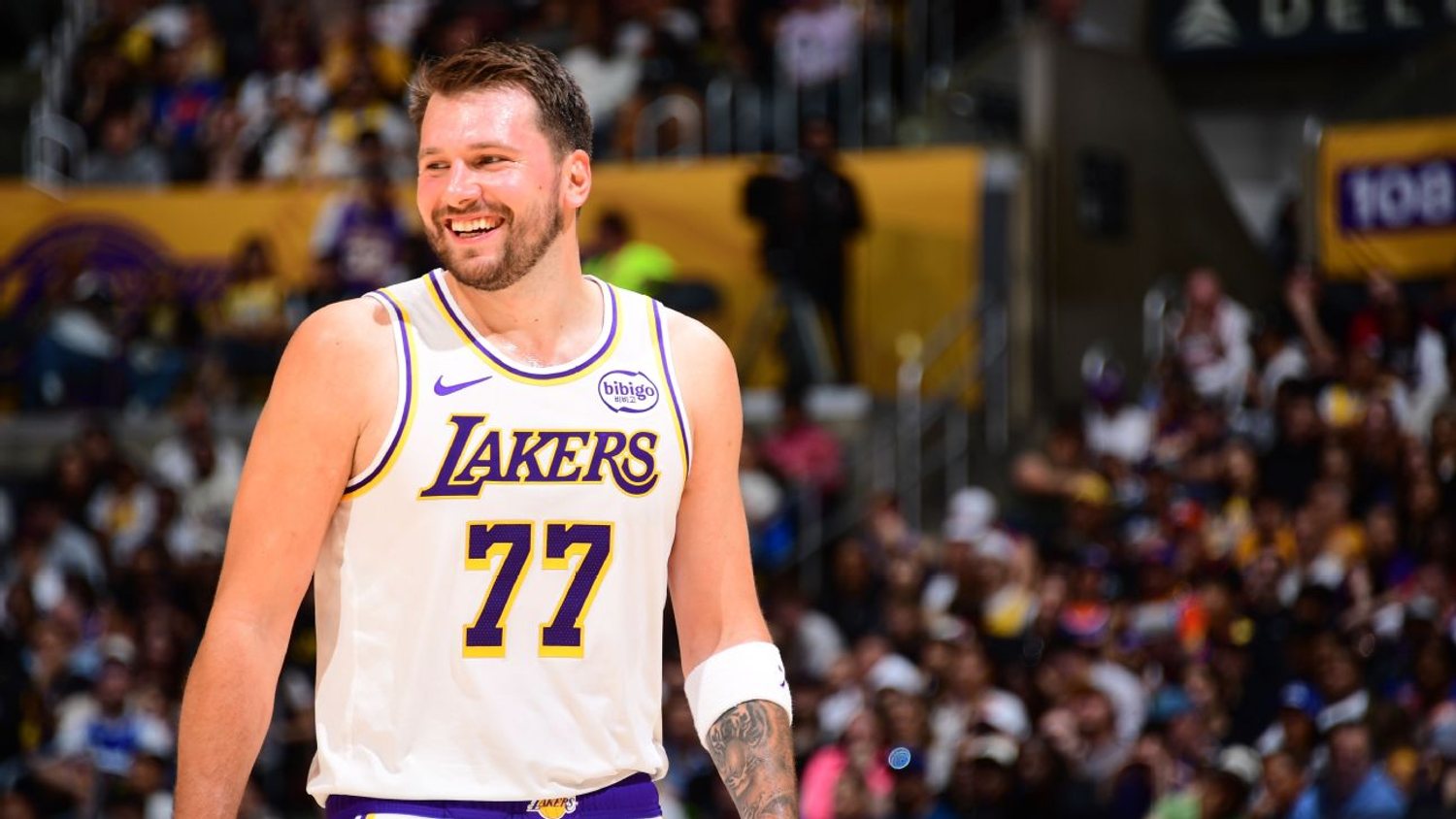
Luka Doncic bought himself a very public standard on Wednesday. In a full-page Los Angeles Times advertisement, the Lakers guard announced a championship ambition and promised sustained effort. Dave McMenamin’s ESPN report, carried by ABC7, dates the message to Oct. 21, ahead of the season opener against Golden State. The phrase I want to keep is the shortest one: “No excuses. No nights off.”
I like the ad. I like a star accepting the expectation instead of asking everyone to lower it until further notice. But I want Doncic to apply that sentence to himself first. A championship pledge becomes useful when it changes what the person making it accepts from his own possessions. The newspaper can carry the announcement. It cannot get back on defense for him.
There is a fair distinction between announcing an ambition and guaranteeing a result. Doncic’s letter sets a title as the destination and asks fans to support the effort. I read that as an invitation to judge the work, not a receipt we can redeem for a parade. Winning a championship involves opponents with plans of their own. Choosing how to respond to a mistake is a much smaller job, and a much more immediate one.
That is where I would start watching. Imagine Doncic believes he was fouled on a drive and the whistle never arrives. My preferred response is a sprint toward the other basket, followed by whatever conversation can fit into a stoppage. The promise should have a practical meaning before anybody puts it on a shirt.
The same goes for a pass that misses its target. I want the passer asking whether the window was actually there, whether he delivered the ball early enough and whether his teammate understood the action. A visible shrug can end an exchange without solving anything. There should be room for Doncic to decide he made the wrong choice, say so and run something cleaner the next time down.
We made a related argument about Austin Reaves leading through specific conversations. Public confidence and private correction can fit together. Doncic can tell the city he believes in the team, then let a teammate tell him that a possession needed a different pass. I would trust that combination more than a leader whose confidence requires everyone else to agree with him.
The first offensive test I care about is whether the decision fits the defense. In our argument for Doncic attacking the Warriors through the paint, the appeal is to make the opponent respond. I want that same patience when the answer is an unglamorous pass. Drawing attention can be productive even when someone else gets the finish. If the ball finds the opening and the shot misses, run back and trust the choice enough to make it again.
I want him setting an example when the action belongs to someone else. If a teammate initiates a possession, Doncic should stay ready to receive the return pass, move when movement would improve the spacing and avoid turning the trip into a waiting room. That is my basketball prescription. A defense has less to decide when a dangerous player removes himself from the action, even briefly.
There is also a difference between effort and doing everything. I do not want the ad interpreted as a demand that Doncic handle every possession or stay on the court until he is exhausted. We have already argued for protecting his minutes with April in mind. The more useful reading is that he should commit to his assignment during the minutes he plays. Rest can be planned. Attention should be expected.
That matters for how I would judge an ordinary bad shooting night. A missed jumper alone tells me little about commitment. I would rather ask whether he kept making useful decisions after the misses. Did he take an available pass? Did he help finish a defensive possession? Did he stay engaged when the next action called for somebody else to score? Those are watch points, not a demand for a perfect box score.
I also want the Lakers to resist using the letter as a weapon against their own bench. The standard should reach his teammates with clear instructions attached. Asking a reserve to bring energy is easy. Explaining where he needs to stand, when to cut and which coverage to call gives that energy somewhere to go. Doncic can contribute to that clarity without becoming responsible for teaching the entire playbook.
For fans, the appeal has a reasonable limit. McMenamin’s account includes Doncic asking the crowd to participate and support the team. I am happy to take the invitation. I would still expect fans to criticize a careless possession or question a decision. Support does not require pretending every loss was unlucky, and a player confident enough to publish his ambitions should leave room for an honest response to the basketball.
Nor should the first result decide whether the message was worthwhile. A win can contain habits that need correcting. A loss can contain the sort of effort a team should repeat. I want the Lakers to assess those possessions with the same seriousness either way. If the slogan only comes out after victories, it will become decoration quickly. Its value is in making a difficult night easier to discuss honestly.
The coach has a part in making that possible. I want corrections delivered to Doncic with the same specificity a reserve would receive. Show him the missed assignment, explain the alternative and move on. There is no need to turn every mistake into a referendum on whether he cares. Equally, there is no reason to excuse the mistake because he can create a difficult shot at the other end. Consistent coaching would give the public pledge something sturdy to rest on. The player should know what the team expects before he has to guess what the crowd thinks.
What I appreciate most is the willingness to make the goal public before there is a result to celebrate. Doncic has given himself something to answer to. Now I want that accountability to feel ordinary: accept the correction, make the next rotation, give the ball up when the pass is right. Keep the newspaper for the season scrapbook. Make the promise visible on the next possession.