
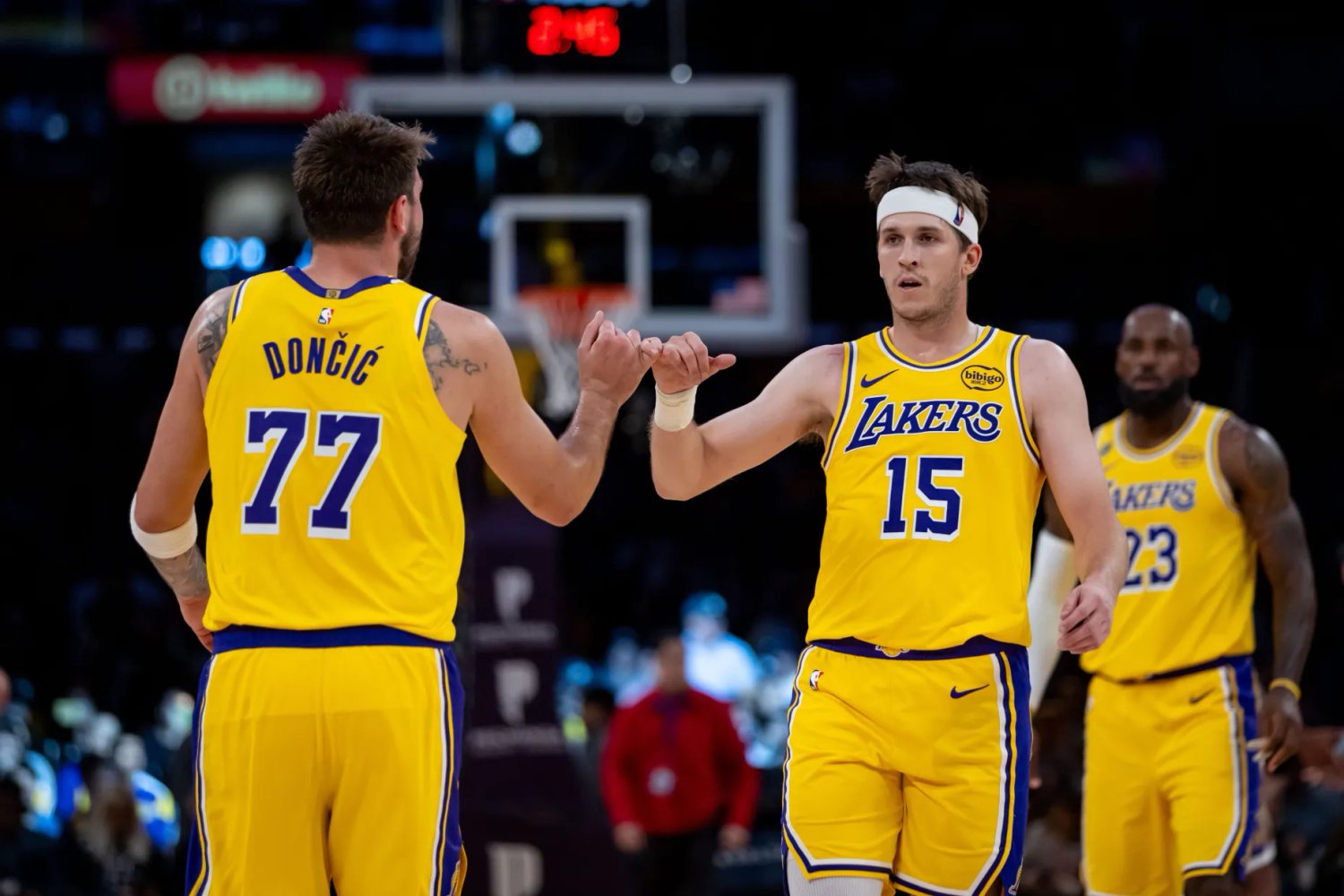
Austin Reaves does not need to deliver a movie speech to lead the Lakers. As of Tuesday, Oct. 20, his public explanation of the job still sounds right to me: individual conversations, with a willingness to address the group when necessary. David Yapkowitz reported those media-day comments on Sept. 29. That sounds like a useful way to run a basketball team, provided the useful part survives the first bad quarter.
I want Reaves to lead the Lakers one conversation at a time. Give a teammate a specific correction, hear the answer and get the next possession right. Save the performance for somebody auditioning to play a coach on television. Reaves should be judged on whether people understand him, including Luka Doncic, rather than how often a camera catches him talking.
The detail I like in Tuesday’s Southern California News Group leadership profile is that Adou Thiero is already seeking his advice. That gives the idea a basketball purpose. A younger teammate needs someone he can approach with a question, especially a question he might feel silly asking in front of everybody. Reaves can make that exchange ordinary. There is value in being the veteran who can explain something without turning the explanation into a public verdict on the player.
That is also where I would draw the line between being liked and being helpful. A conversation should leave the teammate with a clearer job. Where should he stand when the ball goes to the wing? Should he cut on the first drive or hold his position? Who calls out the coverage? I want Reaves helping settle those questions before a misunderstanding costs the Lakers a possession.
We have spent plenty of time on the scoring and passing the Lakers have to replace. Leadership adds another demand: someone has to make the offensive instructions understandable while the game is moving. A coach can call the play. The guard on the floor has to help the other players execute it when the defense changes the picture.
Reaves has enough responsibility to own those exchanges. Basketball Reference lists his 2025-26 regular-season averages at 23.3 points and 5.5 assists in 51 games. He is involved in creating offense, which makes his explanation of a missed connection more useful than a generic request to play harder. I would rather hear what the passer expected and what the receiver saw. Sometimes the receiver has the better answer.
That last part matters to me. A star who starts every discussion certain that he was right is giving a lecture. Reaves should ask questions, too. If a teammate saw an opening that he missed, the next possession should reflect it. The benefit of talking individually is that both people can be honest without feeling obliged to win an argument in front of the bench.
Start With the Other Guard
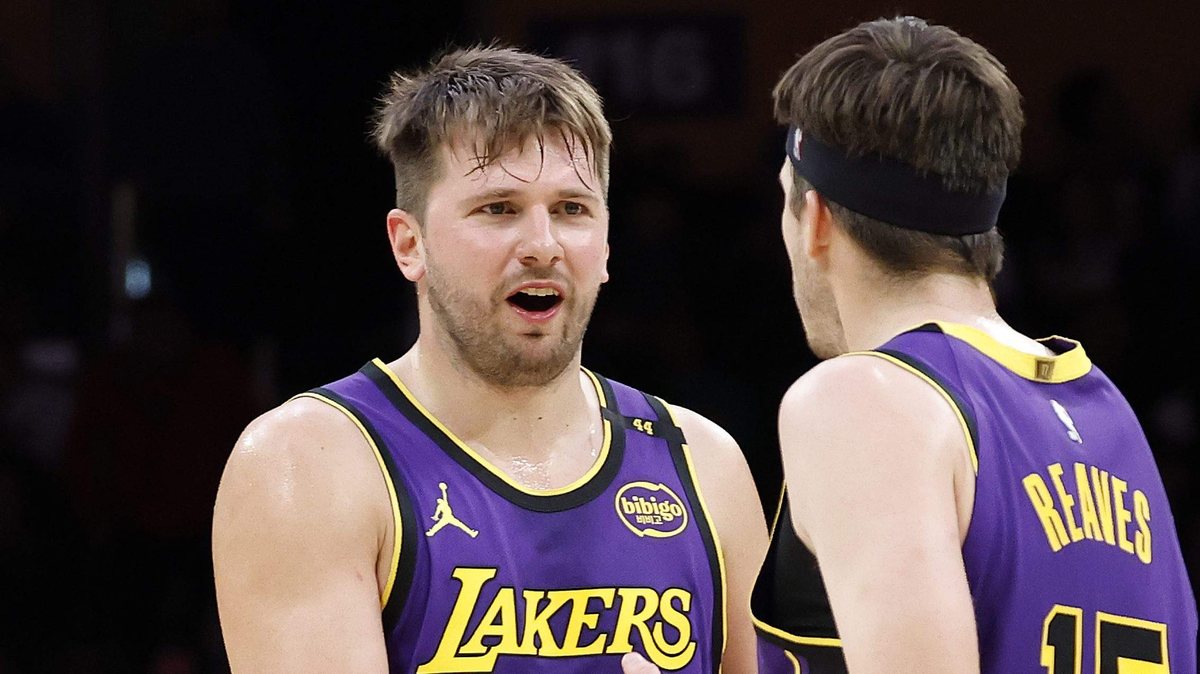
The most important conversation I want Reaves having is with Doncic. It is easy to give instructions to a young player trying to earn minutes. Telling the other star that you needed the ball earlier, or that you both read a possession differently, asks more of the relationship. That should be part of Reaves’ job, with the same permission flowing back the other way.
He has already shown a willingness to include himself in a public criticism. Eli Gregorski’s Oct. 12 account of his comments after practice quotes Reaves identifying himself and Doncic as contributors to the turnover problem. I liked the ownership. As our preseason turnover breakdown explained, the responsibility extended well beyond the two guards. Taking blame is useful; diagnosing the right mistake is more useful.
The numbers also give Reaves a reason to listen. From Basketball Reference’s totals, he had 280 assists and 151 turnovers in the 2025-26 regular season, about 1.85 assists per turnover. In six playoff appearances, he had 35 assists and 27 turnovers, about 1.30. Those are my calculations from the listed totals. They describe the results of his possessions; they do not identify who misunderstood a play or prove a failure of communication.
I would not use that small playoff sample to pronounce him an ineffective leader. I would use it to reject the idea that scoring well gives him nothing left to correct. A leader can say he made a bad read, explain the read he wants next time and still expect a teammate to do his part. That is a much better standard than deciding that every mistake belongs to whoever has the smallest role.
There should be room for disagreement in those conversations. Suppose Reaves wants a teammate to stay in the corner and the teammate thinks a cut would have produced a layup. I want them to settle the trigger: what tells the cutter to go, and what tells him to stay? Agreeing that everyone should make better decisions leaves the same argument waiting for the next game. Agreeing on the cue gives them something to try.
The timing counts, too. Some corrections can wait for a stoppage. Others need a quick word before the ball comes back. I do not want a bad possession followed by a long discussion while somebody else is bringing the ball up. Reaves should help the team move to the next assignment, then return to the disagreement when there is time to resolve it. Being thorough is useful until the game starts without you.
This is one reason I would resist making Reaves responsible for every bench problem. In the case for limiting Doncic’s minutes, we discussed the extra work other guards would have to absorb. Leadership should help distribute responsibility, too. Teach a teammate the read well enough that he can make it when Reaves is sitting. Otherwise, the explanation has become another reason the team needs its stars on the floor.
I will watch the possession after a mistake. Does Reaves identify an assignment before the inbound? Does he listen when a teammate points something out? Does the same pairing look clearer the next time it runs the action? A broadcast will never show every private conversation, and a missed shot will not tell us whether one worked. But the next decision gives us more to judge than the volume of the pep talk.
Reaves can lead in the voice he already has. Make the conversation specific enough that the next possession changes.