
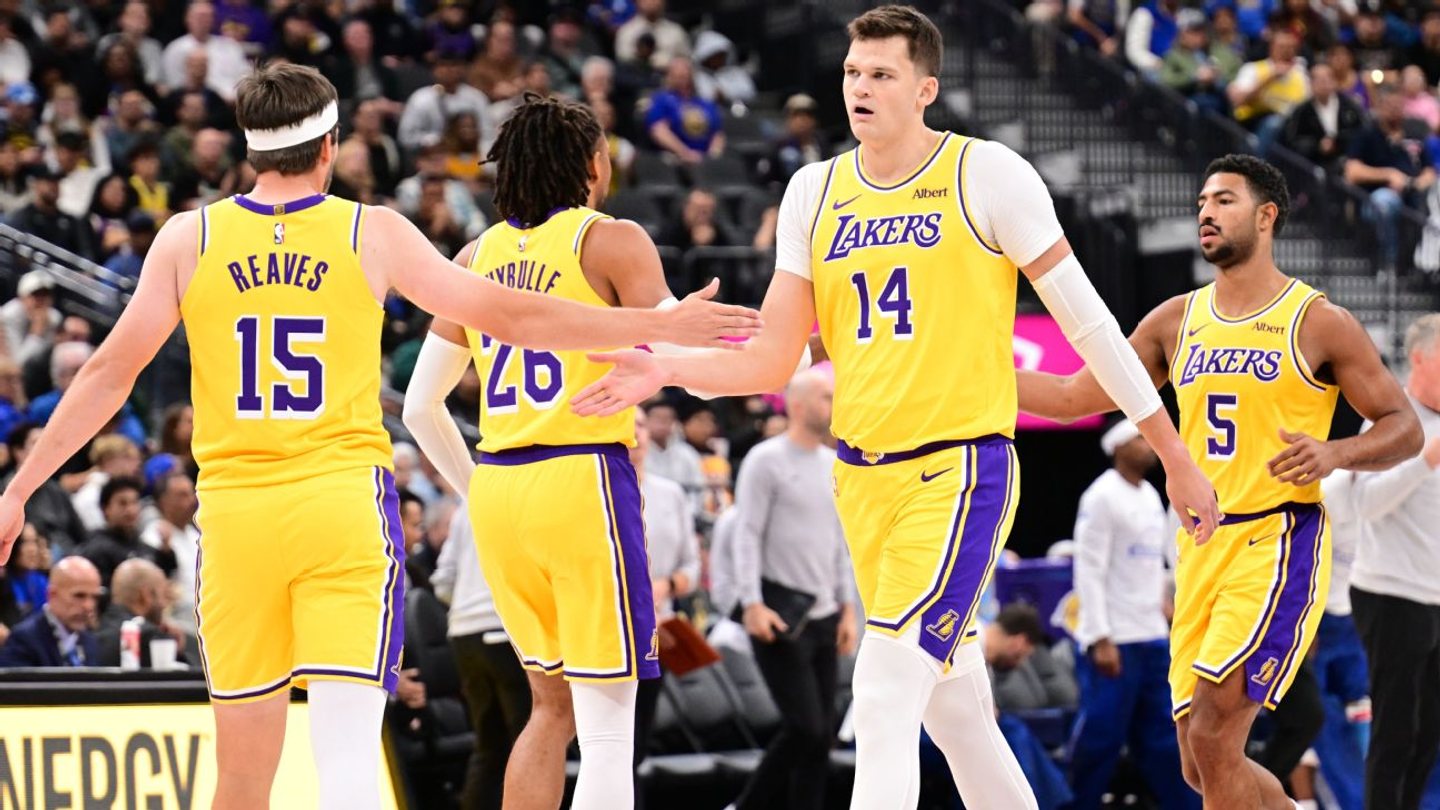
Walker Kessler has missed more free throws than field goals as a Laker. Through Saturday, Oct. 24, Basketball Reference lists him at 22 of 26 from the floor and 4 of 9 at the line. Four missed shots with somebody allowed to guard him. Five with everybody standing around watching. Basketball has a sense of humor, but I would prefer a less stressful punch line in a close game.
I want Kessler closing games for the Lakers. I also want JJ Redick rehearsing how those possessions work when the opponent would welcome a trip to the line. His finishing and shot blocking have earned trust. His free throws need a plan that extends beyond hoping the next pair goes in.
The issue was easy to overlook in Friday’s win over the Clippers. According to ESPN’s final box score, Kessler scored 22 points, made 10 of 14 shots and blocked six in the 125-117 victory. He also went 2 of 5 at the stripe. The missed free throws did not erase an excellent game. They did identify a way an excellent game can become harder to finish.
Two games cannot establish a new shooting level. The reason to address this now comes from Utah. Basketball Reference’s career totals show 231 makes in 424 free-throw attempts across his four Jazz seasons, a 54.5% rate. That history is the concern. The first Lakers week merely put it back in view.
The Improvement Can Be Modest and Still Matter
Kessler’s season-by-season numbers offer encouragement and a warning against declaring the problem solved after a good week. Here are his Utah regular-season totals from Basketball Reference:
| Season | Free Throws Made | Attempts | Percentage |
|---|---|---|---|
| 2022-23 | 82 | 159 | 51.6% |
| 2023-24 | 56 | 93 | 60.2% |
| 2024-25 | 79 | 152 | 52.0% |
| 2025-26 | 14 | 20 | 70.0% |
The 70.0% season came on 20 attempts. The 52.0% season came on 152. Treating those percentages as equally persuasive would be a generous accounting trick. He has shown he can make free throws in stretches; he has yet to sustain that last season’s rate over a comparable volume to his earlier years.
There is a useful middle ground between demanding an overnight transformation and shrugging at the misses. At his Utah aggregate rate, two free throws produce about 1.09 points on average. At 65%, they produce 1.30. Those are calculations using two attempts at each percentage, with no offensive rebound included. They describe the scoring value of the shots themselves, not the complete value of a possession.
That difference is worth pursuing. Over a hypothetical 100 attempts, moving from 54.5% to 65% would mean roughly 10 or 11 additional points. A modest gain can help without turning him into somebody defenses fear at the stripe.
I would use 65% as a working target, then judge progress over accumulating attempts. A perfect night would be welcome. It would not cancel the career record any more than Friday’s misses should define his entire Lakers season. The useful question is whether he can keep making a greater share as the attempts pile up.
The Lakers should keep feeding his strengths while that work continues. Our breakdown of Kessler’s perfect debut argued for trusting the finishing role after the perfect shooting disappeared. That still holds. Taking away a roll to the rim because the finish might draw a foul would let the weakness dictate too much of the offense.
Give him the ball where he can finish. Live with the trips to the line that come from attacking. Work on making those trips more expensive for the opponent. A center cannot improve his usefulness by becoming afraid of the part of the floor where he does his best work.
Keep Him Closing, With Better Decisions Around Him
The tempting answer is to pull Kessler whenever free throws might decide the game. I would resist making that the default. Basketball Reference credits him with eight blocks through his first two Lakers appearances. That does not tell us exactly how the next opponent will attack, but it is a good reminder of what leaves the court with him.
The decision should begin with the possession the Lakers need. Protecting a narrow lead and needing a defensive stop gives me a strong reason to keep him in. Needing to receive an inbound pass while expecting immediate contact gives me a reason to route the ball elsewhere. Those situations deserve different instructions, even if they arrive seconds apart.
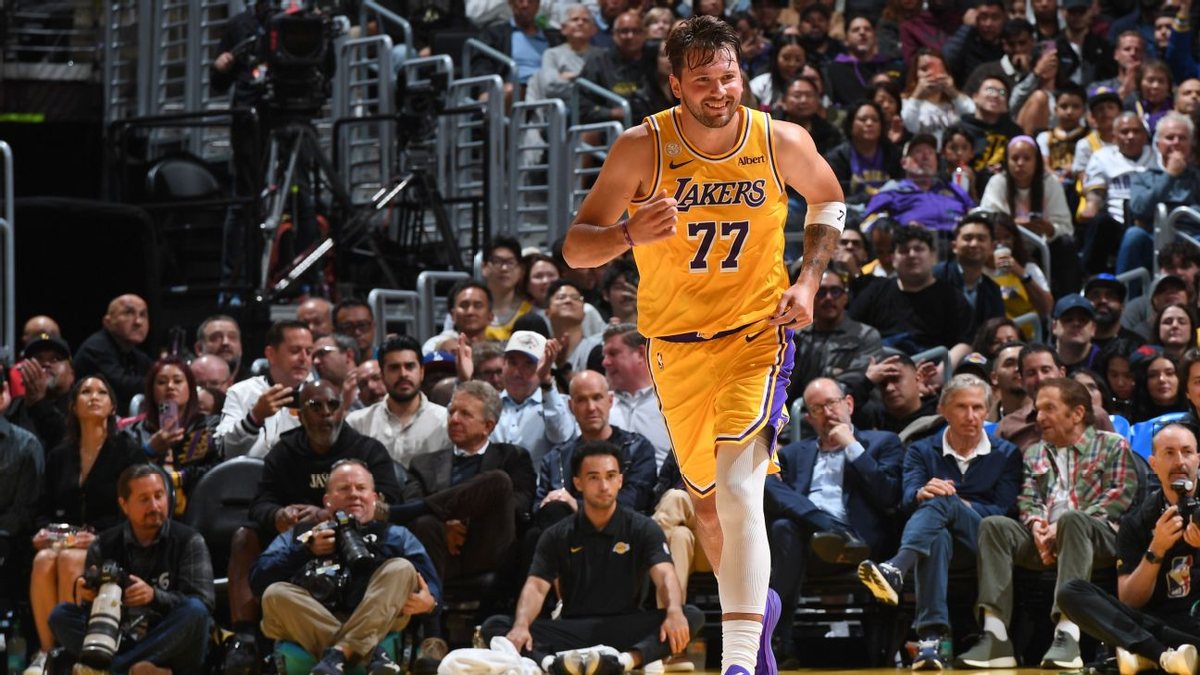
I would practice the inbound sequence with Kessler creating space for a guard to receive the pass, then getting out of the way of the outlet. The first receiver needs a nearby teammate and a clear next pass. Asking Luka Doncic to escape a trap while everyone else watches is a poor way to protect a center from unwanted free throws. It can trade a manageable concern for a turnover.
Kessler should still be available when a direct pass gives him a finish. The distinction I want the guards to make is between finding him at the basket and leaving him holding the ball away from it as the defense closes.
An offense-for-defense substitution can make sense when there is an opportunity to arrange it. I would rehearse the switch and the return, rather than assume a smaller lineup will survive however long it takes to get Kessler back. The Lakers roster and depth chart offers different ways to build a closing group. Each choice still needs someone assigned to the rebound and someone responsible for the next pass.
Nor would I let free throws become a catchall explanation whenever a close game goes badly. If a guard loses the ball before Kessler touches it, that is the guard’s mistake. If the Lakers surrender a rebound after choosing a smaller group, assess that choice. The center’s shooting percentage does not absolve everyone else of their own decisions.
What I want to see next is a team that keeps using Kessler confidently and looks organized when the clock makes possession more precious. Let him finish, let him defend, and give him clear work between those jobs. The Lakers have a center worth keeping on the floor. They should spend October learning how to keep him there in April.