
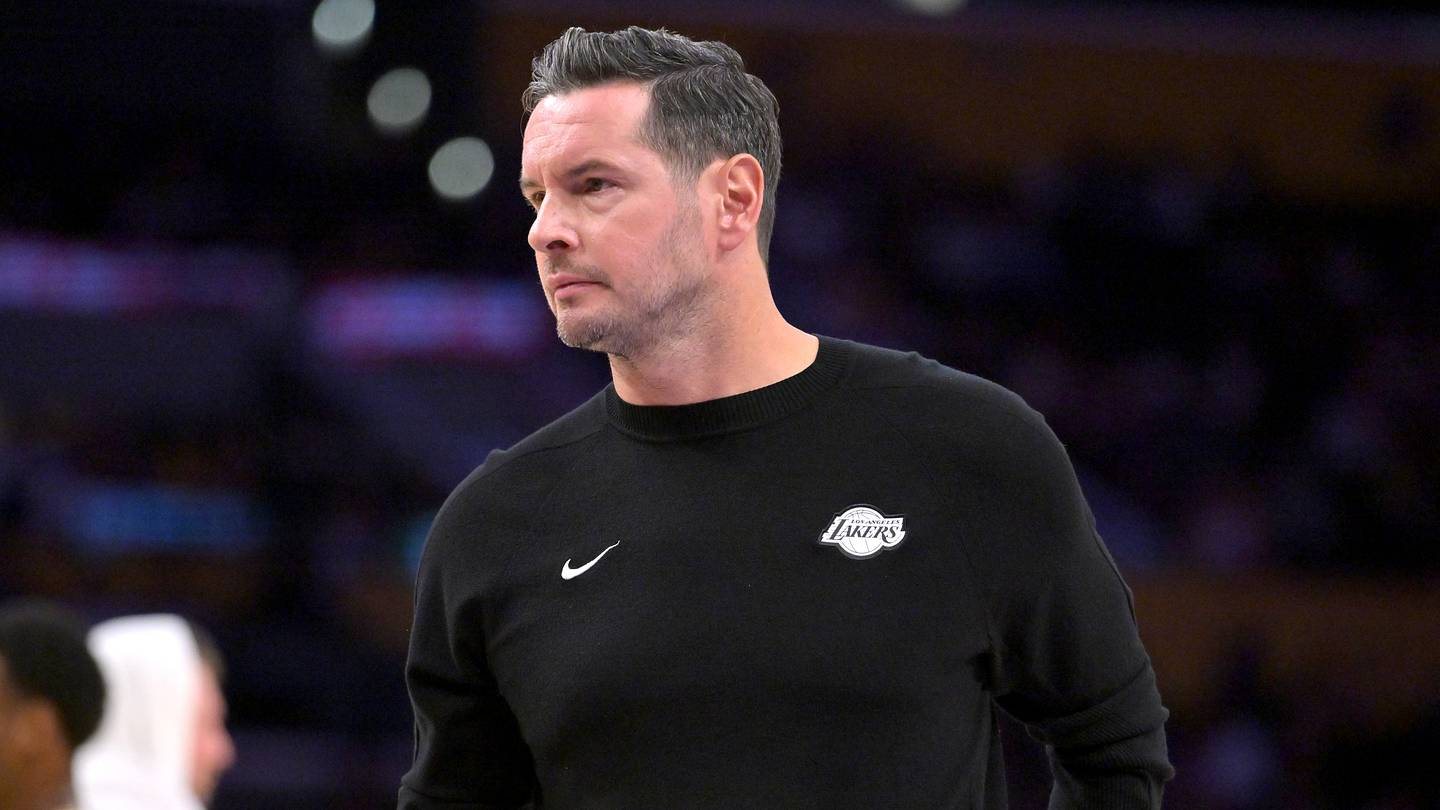
JJ Redick has already identified the uncomfortable part of the Lakers’ season. In Ben Golliver’s Tuesday ESPN report, he called the response to adversity his “biggest unknown.” My first question is how much adversity his starting forwards will be allowed to survive before he changes them.
I want Redick to give his chosen wing starters a fair run through poor shooting nights. Let them make mistakes together, correct the mistakes and play again. If every cold stretch becomes a new audition, the Lakers will have a hard time learning whether the combination actually works. There should be consequences for ignoring an assignment. Missing an open jumper should not carry the same sentence.
The timing makes this more than a generic request for patience. Golliver reported that, as of Tuesday, Redick had yet to name the starting forwards alongside Luka Doncic, Austin Reaves and Walker Kessler. He also reported that Redick had started 12 different players during the preseason. Those details describe a search. Once Redick makes his selection, I want him to let it become a partnership.
The coach’s warning about outside reaction was sensible. Golliver reported Redick anticipating intense scrutiny after losses and emphasizing that the team would need to work through it together. I agree with that message. I also want the substitution pattern to support it. A player should be able to hear that the group needs time and believe the next missed corner shot will not get his job posted.
Our earlier look at Redick’s anger after the preseason loss at Golden State dealt with an audition for bench roles. This is a different decision. For the opening group, I would value repeated possessions with clear instructions over a nightly search for whoever happened to make his first jumper.
A useful trial needs a basketball question attached to it. Can these forwards preserve room for the guards to operate? Can they recognize when to stay available for a pass and when to cut? Can they complete their defensive responsibilities without requiring a teammate to explain the same coverage at every stoppage? Those are the things I would ask Redick to evaluate before counting makes and misses.
Suppose a forward holds the corner, receives a pass after the defense collapses and misses an uncontested three. I want the next possession to offer him that shot again. Benching him for the miss would teach the wrong lesson: being open was apparently insufficient, and perhaps next time he should hesitate until the opening disappears. That is a miserable way to ask a shooter to help an offense.
We have already made the case for Jake LaRavia taking the shots that keep the floor spaced. The coaching obligation follows the same logic. If a player is supposed to shoot when the pass arrives, the instruction has to remain believable after a couple of misses. Permission that expires on contact with the rim is not much permission.
I would treat a missed assignment differently. Imagine a forward leaving his man without any reason to help, then failing to recover after the correction has been explained. Redick should be free to substitute. Patience should buy opportunities to learn; it should not erase the expectation that a player listens. The distinction needs to be clear enough that teammates understand why one mistake gets another chance and another gets a seat.
Give the Starting Pair a Job It Can Keep
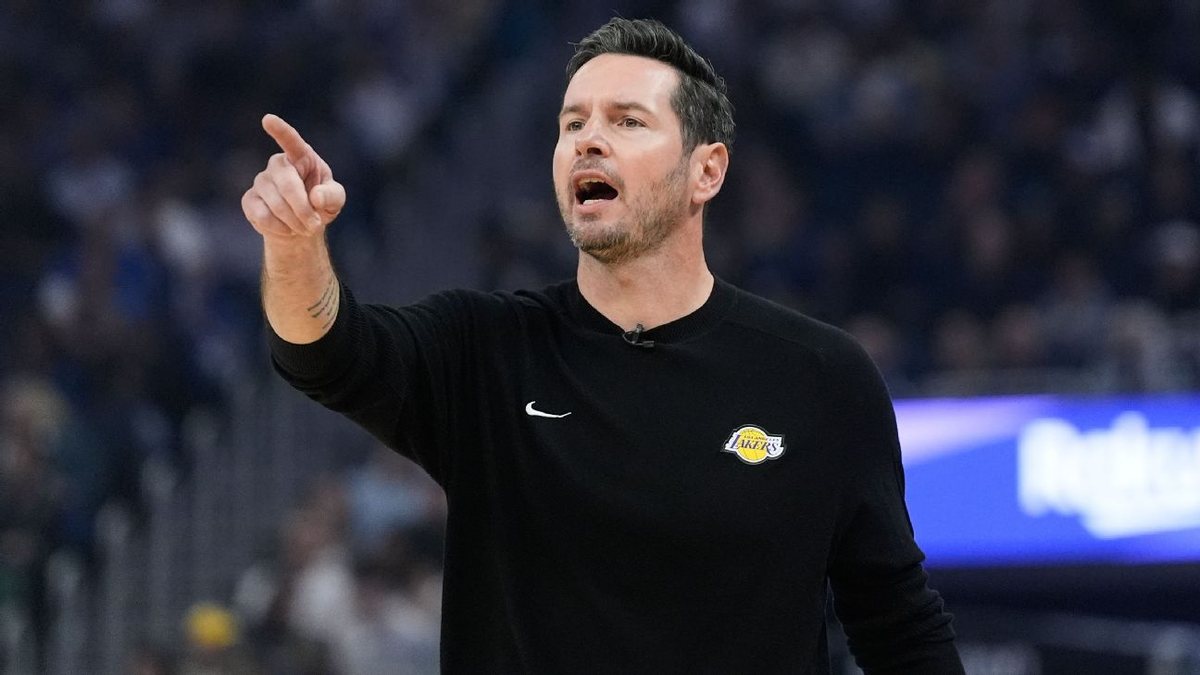
My preference would be to carry the initial forward pairing across several games, provided both players are following the plan. That leaves room to change the closing group for a particular matchup. Starting and finishing do not need to become identical jobs, and an opponent presenting a different problem does not automatically mean the original selection failed.
I would also keep the instructions narrow. Ask the forwards to supply reliable spacing, timely movement and attention to their defensive assignments. Do not ask them to prove they deserve their jobs by creating something spectacular every trip. A wing who spends his minutes trying to win tomorrow’s lineup announcement has a reason to chase the memorable play over the useful one. I would rather remove that incentive.
This is where communication from the guards should help. Reaves’ preference for individual conversations offers a sensible way to make a correction specific. Tell the forward where the pass was supposed to arrive. Let him explain what he saw. Then run the action again with the disagreement settled. A replacement cannot resolve a misunderstanding that nobody has bothered to identify.
There is a reasonable objection to my patience: a fixed starting pair could keep a better combination waiting. I would protect against that by preserving meaningful opportunities for the other forwards within games. Watch how they handle the same responsibilities alongside the guards. A fair run for the starters should provide a standard the alternatives can beat, rather than immunity from competition.
I would change the pairing when a recurring problem survives clear corrections and another combination offers a specific answer. If the issue is where the help comes from, explain how the replacement changes that. If the offense needs a different movement pattern, show the new player executing it. Give the switch a reason that will still make sense after the replacement misses his first shot.
The player deserves a straight answer afterward, too. Did he lose his spot because he kept missing a rotation, or did Redick need a different defender against that opponent? He should leave the conversation knowing what would get him back on the floor. Asking teammates to stay committed to each other is easier when nobody has to decode his coach’s substitutions on the ride home. I want the explanation to be as clear as the hook was quick.
After an ugly loss, I know the temptation to stare at a forward’s empty scoring line and demand somebody else. Redick should make me explain what the replacement would do better. If the answer is only that he might make the same open shots, I would leave the starters alone. And if both pairings struggle with the same assignment, perhaps the coach needs to reconsider what he is asking them to do.
Redick has invited the Lakers to work through adversity together. Let his first starting forwards experience the useful version of that promise: a correction, another opportunity and a job that survives a bad shooting night.