
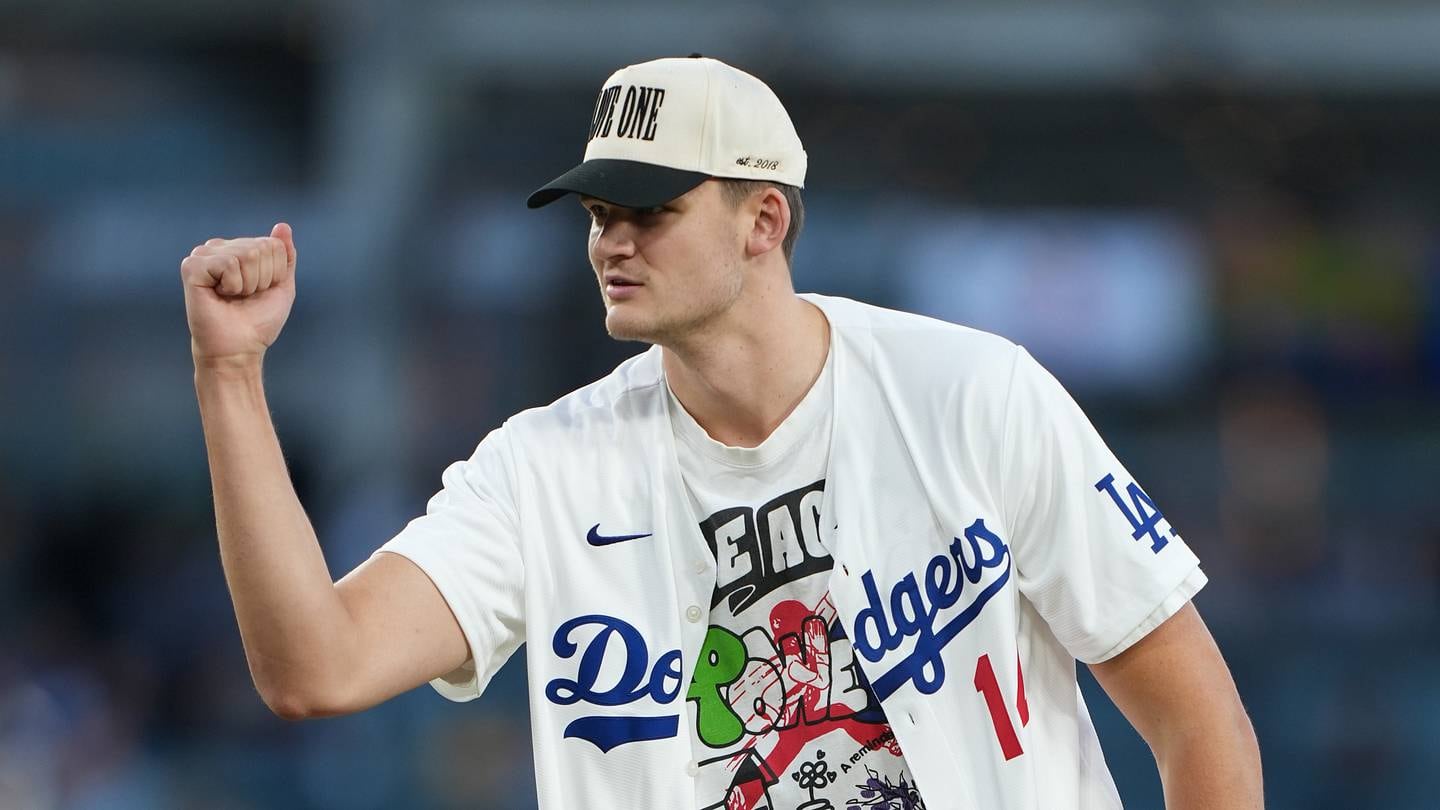
Walker Kessler had a say in where he played this season, and he used it.
Marc Stein reported in The Stein Line on Sunday night, Sept. 27, the eve of media day, that Kessler’s camp “successfully convinced Jazz officials that he was absolutely determined to go the qualifying offer route this summer had he stayed in Utah.” In plain terms: sign the one-year, $7.06 million qualifying offer, play out 2026-27 at a discount, and walk into unrestricted free agency next July while the Jazz got nothing back.
Stein was clear that the price the Lakers were willing to pay mattered most to Utah. But the threat is the piece that explains why the Jazz were listening at all. Utah wasn’t dealing a happy franchise center. It was getting value for a player who had made his plans clear, and the Lakers were the team willing to pay for the privilege. What they got is a 25-year-old anchor who signed up for four years in Los Angeles.
How Utah lost the standoff
Go back to June. On June 17, ESPN’s Tim MacMahon reported that the Jazz had offered Kessler roughly $140 million over five years. MacMahon noted it would have been the largest contract ever given to a center who had never made an All-Star team. Kessler, a restricted free agent at the time, didn’t sign it.
That same week, Kessler posted on Instagram that he had “always wanted to be here,” adding, “You don’t grow roots where you don’t want to be.” Read next to Stein’s report, that post looks strange. I don’t think it was a lie, though. Loving a city and wanting to be paid what the market says you’re worth are two different things, and Kessler’s agents at CAA were sure the market said more. MacMahon wrote after the trade that the Jazz felt their offer was fair, while Kessler’s reps “were adamant it was below market value and proved themselves right.”
They did. The Lakers landed him in early July in a sign-and-trade: four years, $130 million, a player option in the fourth year and a full trade kicker. That works out to about $4.5 million a year more than Utah’s five-year offer. He makes $30.2 million this season.
The price in picks was real. Utah received unprotected first-round picks in 2031 and 2033 plus first-round swaps in 2028 and 2030.
What the Jazz say now
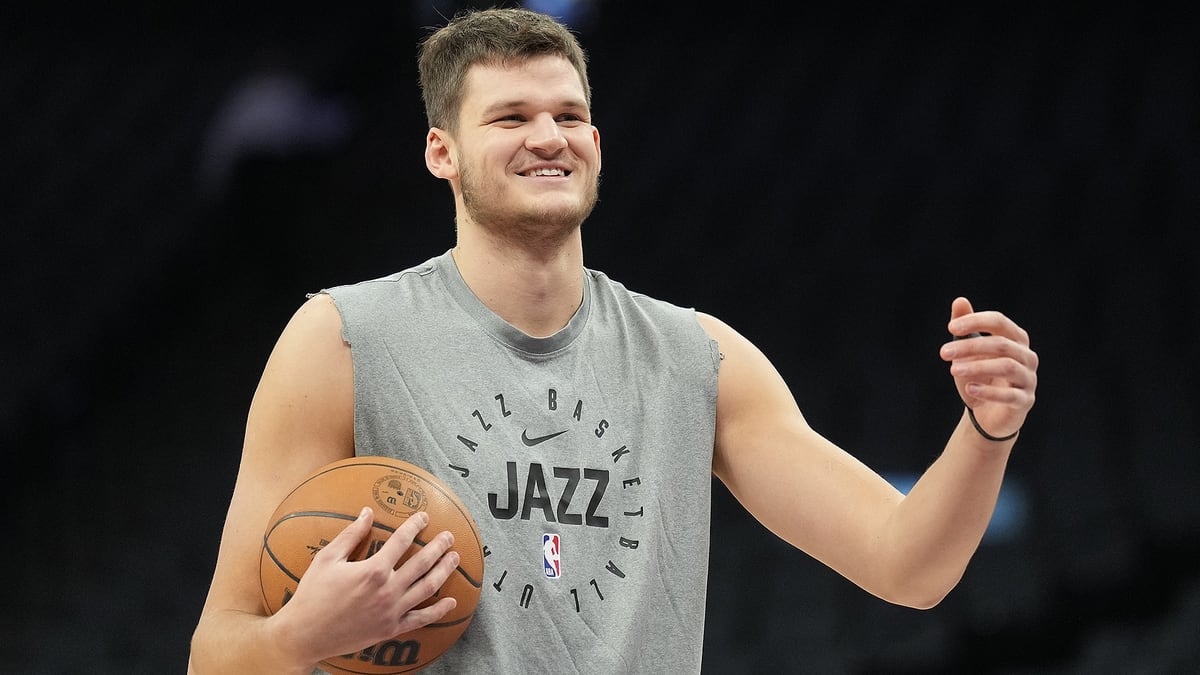
Jazz president Austin Ainge said in a recent interview that Utah had been talking about Kessler “off and on for a year” and was planning to keep him. “But that offer got high enough that we thought it was the right move to make for the Jazz, for building a championship team,” Ainge said.
Stein and Ainge agree on the main point: the Lakers’ offer is what moved Utah. The qualifying-offer threat is what made that offer hard to refuse. It explains why Utah took picks that won’t convey for five and seven years instead of players who could help now. When the alternative is watching your starting center walk in 2027 for nothing, two unprotected firsts from a team built around Luka Doncic look a lot better.
Could the Lakers have waited a year and signed him outright? Not realistically. They are a tax team with Doncic and Austin Reaves alone making more than $91 million this season, so there was never going to be cap space for a starting center next summer. A trade was the only door, and Kessler held it open.
Why the Lakers wanted him this badly
The numbers at the rim are the whole case.
Among players who defended at least five shots at the rim per game over 40 or more games, opponents shot 51.5% against Kessler in 2022-23, third-best in the league. In 2023-24 it was 50.9%, second-best. In 2024-25, his last full season, it was 54.8%, sixth-best, per NBA.com tracking data. That same season he averaged 2.4 blocks per game, second in the NBA, and 12.2 rebounds, according to Basketball Reference.
Now compare that with what the Lakers had. Deandre Ayton started 72 games at center last season, and opponents shot 61.5% at the rim against him.
JJ Redick called Kessler “a perfect fit for Luka and [Austin Reaves] just in terms of his rim protection and really being an anchor for our defense.” He has compared the plan to how San Antonio uses Victor Wembanyama. “We look at him as someone we want close to the basket, protecting the rim,” Redick said. That is why the Lakers expect to play more drop coverage this year after a season in which they switched more than any team in the league, mostly out of necessity. You can only sit back in drop if the player at the back actually stops people. For three straight healthy seasons, Kessler has.
The Shoulder Looks Fine. The Depth Behind It Doesn’t
Kessler played five games last season. A torn labrum in his left shoulder ended his year, and he had surgery.
Rob Pelinka addressed it head-on at his start-of-season press conference on Sept. 24. “We did such a deep dive in his medical,” he said, adding that the Lakers’ medical staff believed the surgery was “a one-time fix.” He called Kessler “fully healthy, fully cleared.”
Kessler went further at media day. “I feel 110%. My shoulder feels better than it’s ever felt,” he said, per Yahoo Sports. “It’s back to better than what it was. So there’s no question in my mind about it.” He has practiced through the first week of camp with no reported restrictions.
So I’ll take him and the doctors at their word. What worries me is the depth chart behind him. Kevon Looney is the only other traditional center on the roster. Sandro Mamukelashvili can play the five in small lineups, but he’s a stretch big, not a shot blocker. If Kessler misses a month, the defense the Lakers just rebuilt around him has nobody to anchor it, and Redick is back to switching everything, the habit he’s trying to break.
What to watch
The preseason opens tonight in Sacramento. Watch Kessler’s minutes and whether he plays both ends of the back-to-back at Golden State on Tuesday. If the Lakers are careful with him in October, that’s a sign of how much they need him in April.
Kessler picked his exit from Utah and landed the job of anchoring a Luka Doncic team. The Lakers bet two unprotected first-round picks that he’s the right man for it. If he stays on the floor, that bet looks smart by Christmas. If he doesn’t, the Lakers have no second anchor to fall back on.