
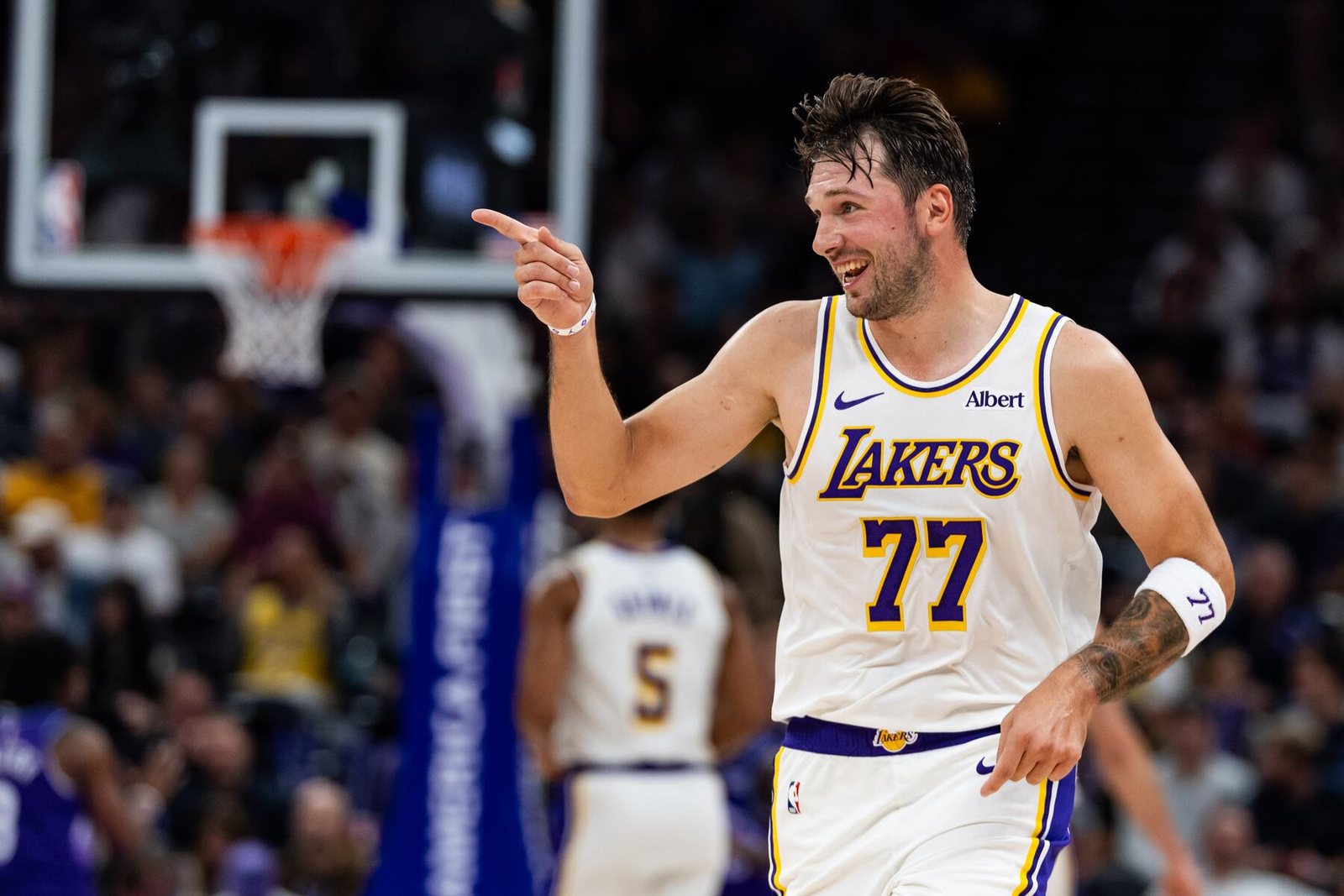
Draymond Green has now told us twice in less than a week that Luka Doncic will never win MVP. The first time, on his podcast last Wednesday, he also called this season “the last possible year he can win it,” which is an impressive amount of hedging for a man using the word “never.” On Monday, after Doncic dropped 52 on Utah, he went back to the microphone and said, “I still don’t think there’s any chance that he’s going to win MVP.”
Green’s reason is voter fatigue. “I think people get bored with greatness,” he said on Monday’s episode of The Draymond Green Show, as quoted by Tristan Rawcliffe of Pro Football Network. “He’s in Year 9, and the people who vote, they’ve already moved on.” I think he has the diagnosis backwards. Voters have spent the last decade rewarding players they were supposedly tired of. What has kept Doncic off the top of the ballot is simpler and fixable: games played and team wins.
The ballots don’t show boredom
Start with the man who just won it. Shai Gilgeous-Alexander took the 2025-26 MVP with 83 of 100 first-place votes, per Basketball Reference, one year after winning the 2024-25 award. Voters were handed the same player doing the same thing two years running and they did not move on. They piled on.
Nikola Jokic is a cleaner rebuttal. He won in 2020-21 and 2021-22, finished second in 2022-23, then won again in 2023-24. That third MVP came in his ninth NBA season, counting from his 2015-16 rookie year on his Basketball Reference page. Year 9 is exactly where Green says voters have “already moved on.”
James Harden won his only MVP in 2017-18, also his ninth season, after finishing second in 2014-15 and 2016-17. Joel Embiid finished second twice in a row before winning in 2022-23. If voter fatigue were real, the near-miss crowd would be the first to suffer from it. Instead, Harden and Embiid both cashed in after years of being the guy who almost won.
So when Green says people are bored with Doncic, I want the evidence. The ballots point the other way. Voters reward repeat greatness, and they have a soft spot for the runner-up who keeps coming back.
What has actually cost Doncic
Here is Doncic’s MVP history from Basketball Reference: fourth in 2019-20, sixth in 2020-21, fifth in 2021-22, eighth in 2022-23, third in 2023-24, nothing in 2024-25, fourth in 2025-26. Six top-eight finishes and zero trophies.
Look at the empty year first. In 2024-25, the season of the trade, he played 50 games and got no votes. Last season he played 64, one short of the league’s 65-game threshold, and only got onto ballots because the NBA and the players’ union agreed he qualified under the CBA’s extraordinary circumstances provision. Jack Maloney of CBS Sports reported the decision on April 16, 2026. Doncic missed two December games to be in Slovenia for the birth of his daughter, which nobody should hold against him, and the final five games with a hamstring injury.
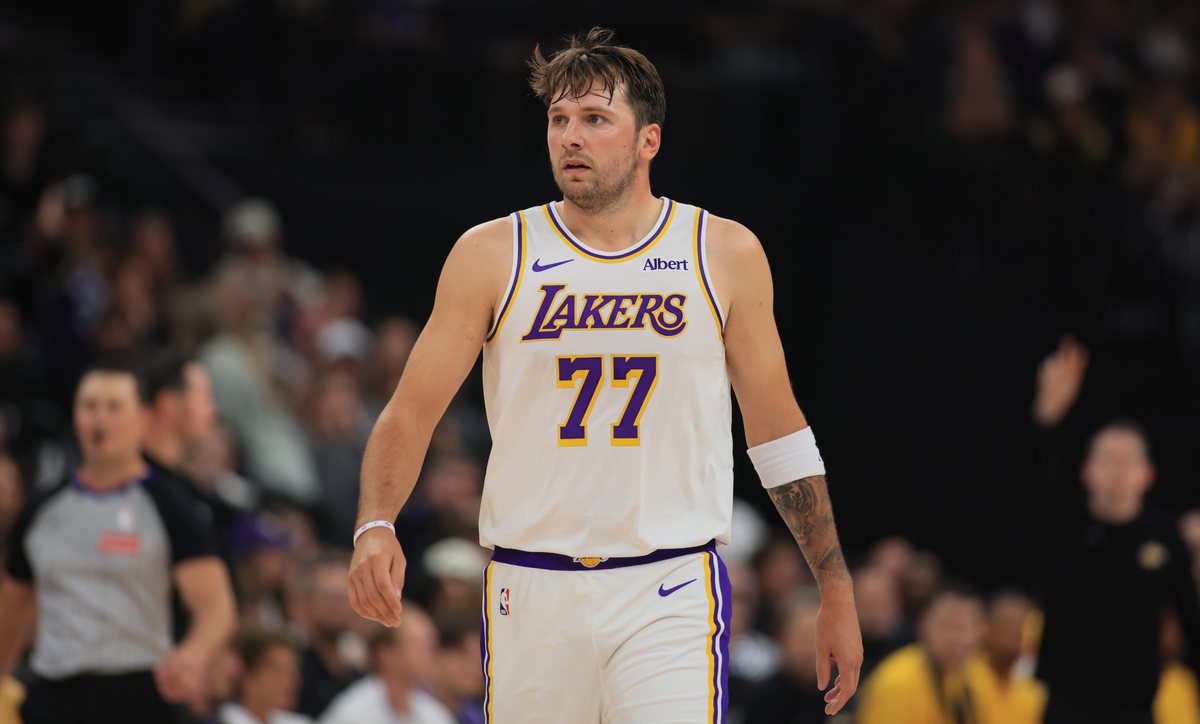
Now the wins. Doncic led the league at 33.5 points per game last season and finished fourth with zero first-place votes and 250 points. The three players ahead of him played for Oklahoma City (64-18), San Antonio (62-20) and Denver (54-28), per Basketball Reference’s standings. The Lakers went 53-29 and finished fourth in the West. Voters had three candidates on better teams, and Gilgeous-Alexander and Jokic also played more games. Jokic added 12.9 rebounds and 10.7 assists a night. Wembanyama blocked 3.1 shots a game.
The Lakers were 43-21 in the 64 games Doncic played last season, per Basketball Reference’s team schedule and his game log. That works out to roughly a 55-win pace over 82 games, still short of the Thunder and the Spurs. The gap between Doncic and the trophy is a handful of wins and a handful of games.
Green is half right about one thing
Buried in Monday’s riff was a sharper point than the boredom theory. Green said, per the California Post’s Valentina Martinez, that “the moment he have a few bad games or an injury that costs him a few games, people are gonna flip back on him.” That part I buy. A missed week makes voters do math. The 65-game rule turned availability into a hard gate, and Doncic has spent two straight seasons on the wrong side of it.
That is why I keep coming back to the argument we made before the opener, that the Lakers should cap Doncic at 34 minutes. An MVP case is built in April, when the ballot is filled out, and a hamstring in April wipes out everything he did in October. He played 38 minutes and 26 seconds in Salt Lake City on Sunday. Fun night. I do not need many more of those in a regular-season game against a team that won 22 games last year.
The start is real, and so are the turnovers
Through three games, Doncic is at 34.3 points, 8.0 assists and 7.3 rebounds with a .637 true shooting percentage, per Basketball Reference, and the Lakers are 3-0. Sunday’s 52 came on 17-of-30 shooting with eight threes and 10 assists. Green watched that and still said no chance. Fine. Voters will be watching the same box scores.
They will also see 21 turnovers in three games, including 11 against the Clippers on Friday. We covered why ball security was the real story of the 52-point night, and the same goes for the defense that has to show up from the opening tip. Jokic and Wembanyama both turned it over less per game than Doncic last season, and both carried bigger defensive reputations onto the ballot. Those are the two gaps he has to close.
That is a checklist, and every item on it is something Doncic controls more than any voter does: play at least 65 games, win enough to sit near the top of the West, and give back fewer possessions. He made a title pledge to Lakers fans before the season. The MVP route runs through the same habits.
Next up: Portland
Portland visits on Tuesday. Doncic is 27, he is in his ninth season, and Green is right that this is a big year for his MVP case. He is wrong about why. The voters are waiting to see if Doncic is still on the floor in April for a team that wins enough to make the vote easy.
If he is, Green will need a new theory.