
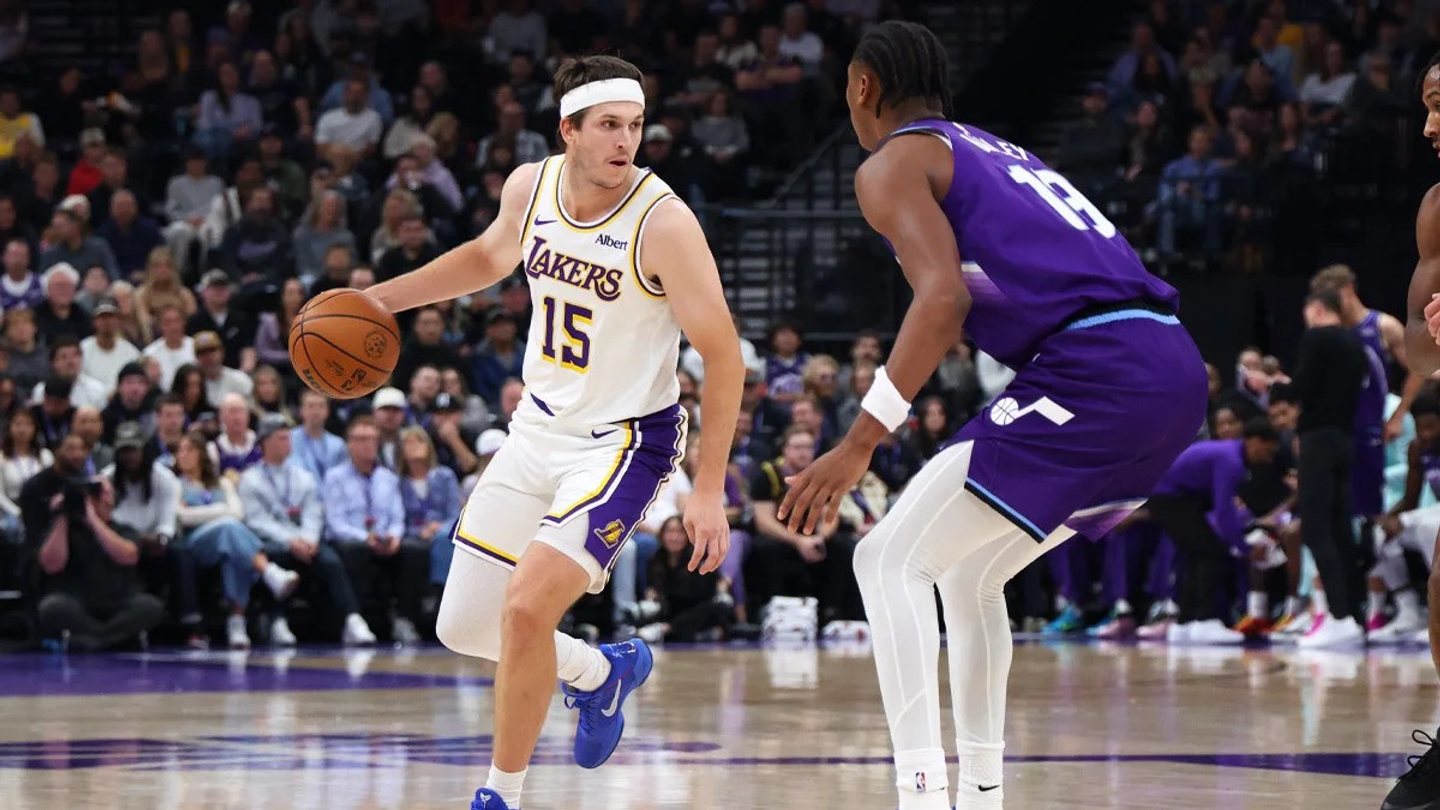
Austin Reaves has made eight threes in three games. He has missed five. As of Monday, Oct. 26, Basketball Reference lists him at 61.5% from deep, the kind of opening-week number that makes a shooting coach briefly consider retirement while his reputation is intact.
I want the Lakers to give him more chances to shoot. The percentage is a lovely souvenir from the opening week. The opportunity is in the denominator: Reaves has attempted only 13 threes. Los Angeles should try to get that volume closer to his previous two seasons, without asking him to keep making shots at this ridiculous rate.
Basketball Reference’s season totals put his opening three-point workload at 4.3 attempts per game. He averaged 6.4 last season and 7.3 in 2024-25. Those earlier workloads give JJ Redick a useful starting point for setting expectations. Reaves has already handled more shooting than this without needing anything close to his current accuracy.
My preference is roughly six good three-point attempts a night. That is a coaching target, with flexibility for what the defense allows. It asks Reaves to return toward familiar shooting volume while keeping room for the drives and passes that make him useful. There is no prize for taking the sixth one through a defender’s forehead.
ESPN’s Sunday box score at Utah shows four makes in five attempts from three, part of his 29 points on seven-of-12 shooting. Against the Clippers on Friday, ESPN recorded three makes in five attempts. Those two games account for seven of the eight made threes in his season total. Enjoy them. Also notice how few misses it would take to change the conversation.
Using Basketball Reference’s totals, if his next seven three-point attempts all missed, he would be eight of 20, or 40%. The percentage could move sharply in a single game. It shows why I would resist writing a new shooting identity onto a sample small enough to fit inside one busy night from a high-volume shooter.
The stronger argument for more attempts comes from the older columns. Basketball Reference records 200 makes on 531 threes in 2024-25, or 37.7%, followed by 118 on 328 last season, or 36.0%. Across those two seasons, my calculation gives him 318 makes in 859 attempts, approximately 37.0%. That is a much larger basis for deciding whether he should let an available three fly.
I would trust that record when the next open catch arrives. A coach should not need Reaves to be shooting above 60% to approve a clean attempt. The first few games make the choice feel easy, but the permission needs to survive the night when the same shot catches the back rim three times.
Give Him the Shot Before the Defense Resets
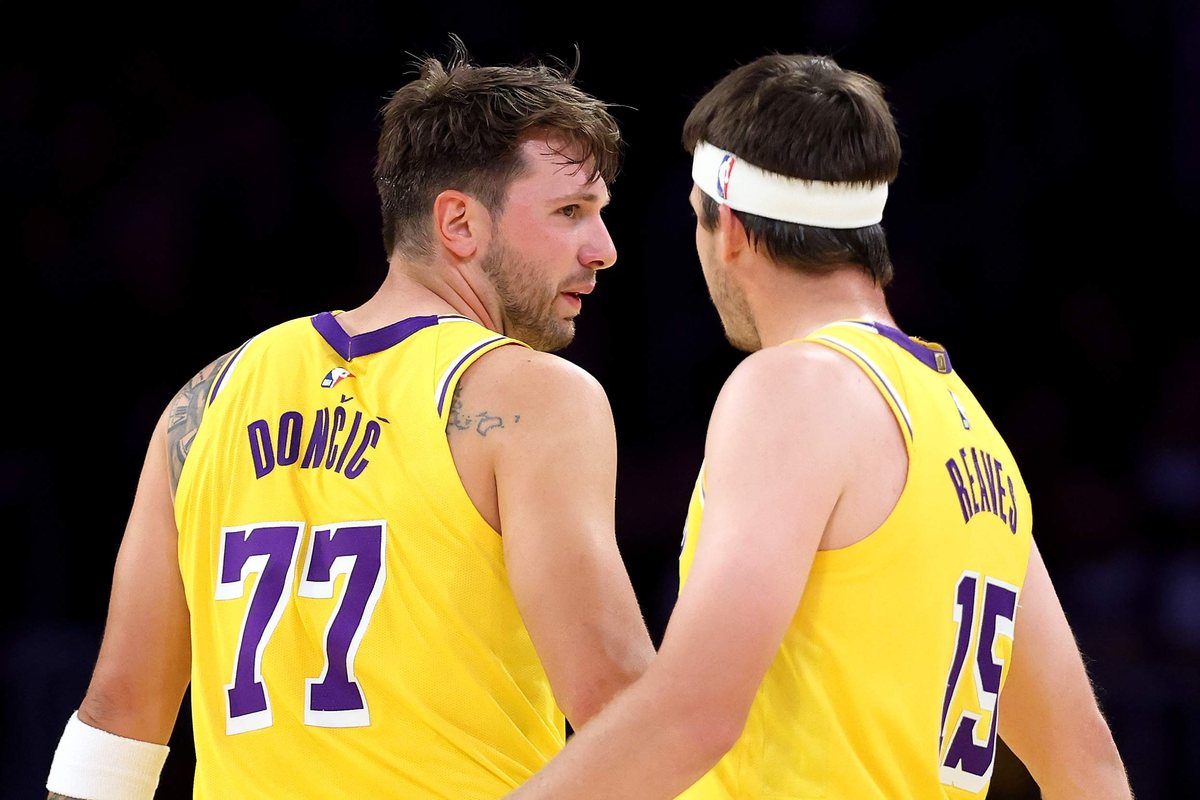
The practical change I want is simple: when Luka Doncic passes to Reaves with room beyond the arc, the shot should be his first serious option. Assess the defender, set the feet and let it go when the opening is there. A catch should not automatically become a dribble just because Reaves can create something more elaborate.
That fits beside our argument for preserving Reaves’ opportunities to create. He should have possessions to initiate offense. He should also be willing to finish a possession someone else has already created. Asking him to do both gives the Lakers more ways to use their guards together, and saves some attacks from becoming an unnecessary second project.
Build some of that shooting into the plan before asking Reaves to find it on his own. Try a possession with Reaves coming toward the ball off a screen, ready to shoot if his defender trails. Try having him relocate after an initial pass, giving Doncic a return target somewhere other than the spot the defense just watched him leave. I want Redick to call for those movements early, so Reaves gets a shooting opportunity before the possession stalls.
The condition is shot quality. I would rather see him finish with four clean attempts than reach six by launching two desperate ones. But if the Lakers repeatedly finish games with Reaves passing up room to shoot, I want the coaching staff to treat those choices as missed opportunities. Patience can become its own form of waste when an advantage disappears while everyone waits for a prettier one.
There is room to make that demand without turning him into a stationary specialist. Keep him moving after passes and available after the first action, with a chance to receive the ball again. He can still attack a hard closeout. He can still pass when help commits. The extra shooting should make those decisions more dangerous, because the defender has a reason to arrive in a hurry.
For a sense of the scoring involved, consider a deliberately plain calculation. Six three-point attempts at last season’s 36.0% accuracy produce 6.48 points per game from threes. His current eight makes across three games produce eight points per game from threes, calculated from Basketball Reference. Even raising the volume to six would not preserve his current three-point scoring if the accuracy returned to that older level. More attempts are a way to keep the shot involved, not a trick for making regression disappear.
That is also why the Lakers should avoid setting their scoring expectations around opening-week percentages. Reaves has supplied extraordinary accuracy on limited attempts. If the planning assumes that continues, an ordinary shooting week will leave the offense short of what it expected. If the planning instead gives a proven shooter regular opportunities, the Lakers can judge the execution without requiring exceptional accuracy to make the plan work.
Our account of the win in Utah focused on protecting possessions while Doncic supplied the scoring eruption. The next offensive demand should include getting more from the possessions that reach Reaves with a clean shooting window. Keeping the ball matters. So does accepting the available reward before the defense takes it away.
I will be watching the attempts as closely as the makes. Let the percentage come back to earth on its own schedule. Reaves should keep the green light, and use it a little more often.