
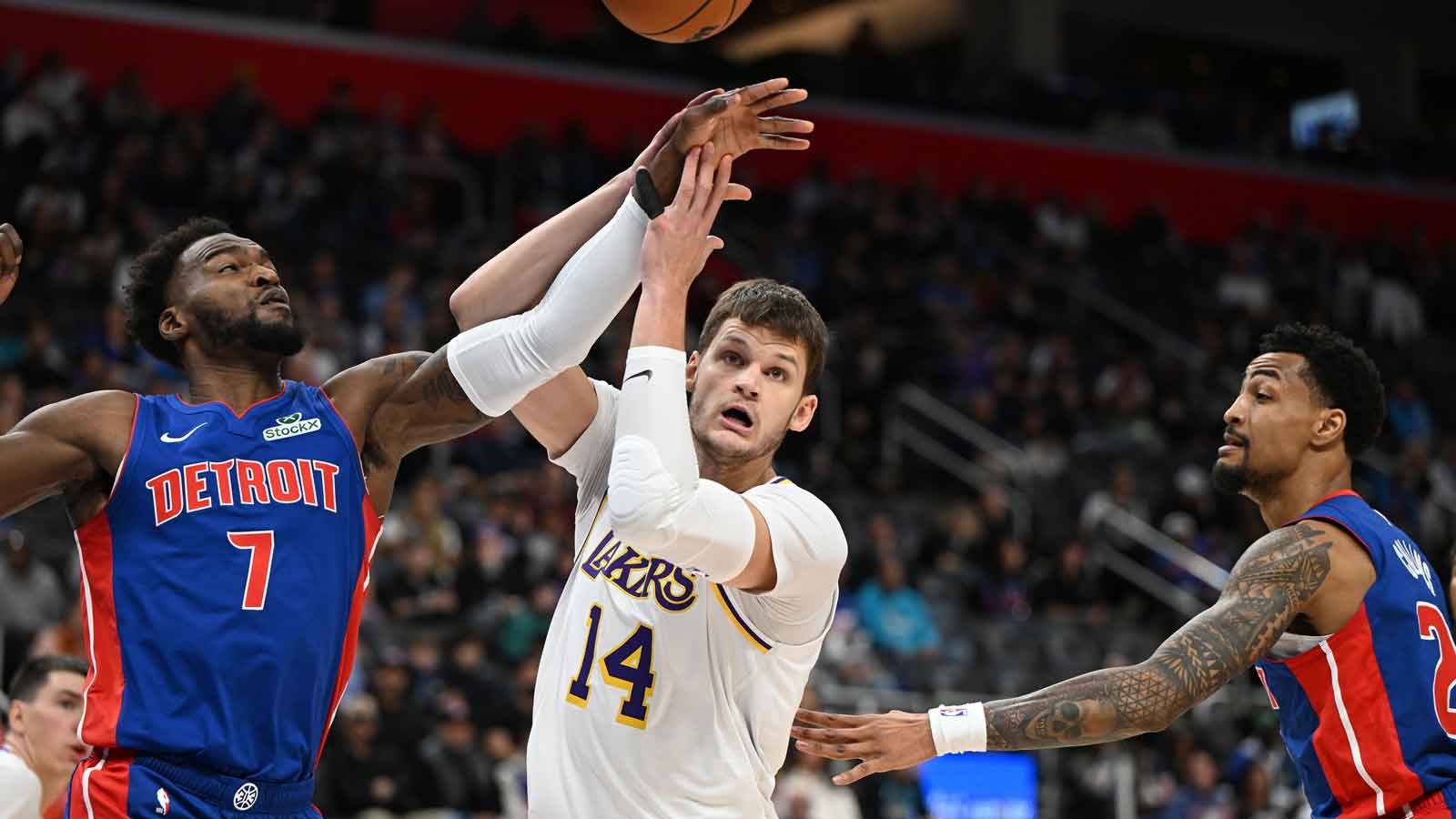
The Lakers are 11-2, the best record in the NBA, and opponents have made 14 more threes than they have. That’s 197 to 183 through Wednesday’s win in Milwaukee, per Basketball Reference, or 42 points the Lakers have given back from behind the arc. They’ve made up for it with a 110-point edge on two-pointers and 35 more points at the free-throw line.
My take: Walker Kessler has the rim closed, and the defense around him has paid for it at the three-point line. That’s the leak. JJ Redick should judge this defense by how many threes it allows, not by how many steals it piles up, and the next five games are a soft enough stretch to fix it before the schedule turns.
The Paint Is Closed
Only 17.3% of opponents’ shots this season have come within three feet of the basket, tied for the fourth-lowest share in the league, per Basketball Reference’s opponent shooting table. The league average is 22.6%. Opponents are also taking the fifth-fewest two-point attempts per game against the Lakers.
I give most of the credit to Kessler. He is averaging 2.2 blocks in 30.8 minutes, with a block percentage of 7.7, and the Lakers have outscored opponents by 12.4 points per 100 possessions with him on the floor, per Basketball Reference.
The Lakers also take the ball away. They lead the NBA with 11.0 steals a game and force 18.5 turnovers, second-most in the league. I wrote after four games that turnovers wouldn’t fix this defense, and the steals have kept coming anyway. They’re a big reason the Lakers are winning.
The Arc Is Open
Opponents take 47.3% of their shots from three against the Lakers, the fifth-highest share in the league; the league average is 43.1%. They’re attempting 40.5 threes a game, sixth-most, and making 15.2, second-most behind only what Miami allows. The Lakers rank 17th in defensive rating at 114.7 points per 100 possessions.
It’s getting worse, too. In the last four games, against Portland, Detroit, Atlanta and Milwaukee, opponents made 68 threes on 173 attempts. The Lakers made 52. They won all four.
Detroit was the cleanest example. Before that game I argued the Lakers should stay glued to Duncan Robinson and dare Cade Cunningham to shoot. They did it. Robinson went 3-for-11 and Cunningham 1-for-6, per ESPN’s box score. Then Daniss Jenkins went 8-for-15 from three, and the Pistons made 19 on 48 attempts. The plan for the stars held, and somebody else made the Lakers pay.
The losses tell the same story. Portland made 18 of 36 threes in its October win, and Golden State made 22 of 46 in its, per Basketball Reference’s game log. In the seven games where the opponent made more threes than the Lakers, they’re 5-2. When they win the three-point line or tie it, they’re 6-0.
Some of It Is Luck
Opponents are shooting 37.4% from three against the Lakers, 24th in the league, and some of that will come back down. The best sign is in the corners. The Lakers allow a slightly smaller share of corner threes than average, 23.7% of opponent attempts against a league average of 25.1%, but opponents are hitting 40.0% from the corners against them. The league average is 36.0%. I’d expect that number to drop.
The attempts are a different problem. Forty threes a game is a choice the defense makes on every rotation, and no amount of regression fixes that part. When I wrote about Kessler letting the wings pressure the ball in October, the whole point was that somebody had to stay home on the pass out. Thirteen games in, that’s still the piece that breaks.
There are two smaller leaks behind it. The Lakers rank 27th in defensive rebound percentage at 68.6% and 24th in opponent free throws per field-goal attempt, per Basketball Reference. A defense that gives up threes, second shots and free throws needs the league’s best offense to bail it out, and so far it has one.
Why the Record Is Ahead of the Team
The offense has covered for all of it. The Lakers lead the league in offensive rating at 122.7, in true shooting at 63.2% and in two-point percentage at 59.8%.
But Basketball Reference’s Pythagorean record, built from points scored and allowed, has the Lakers at 9-4. Their schedule hasn’t been soft, either: strength of schedule is 0.55, 13th in the league. Against the four opponents with winning records through Wednesday (Golden State, Portland, Detroit and Atlanta) they’re 4-2, and both losses came on nights the other team shot better than 47% from three.
Reaves Makes It Urgent
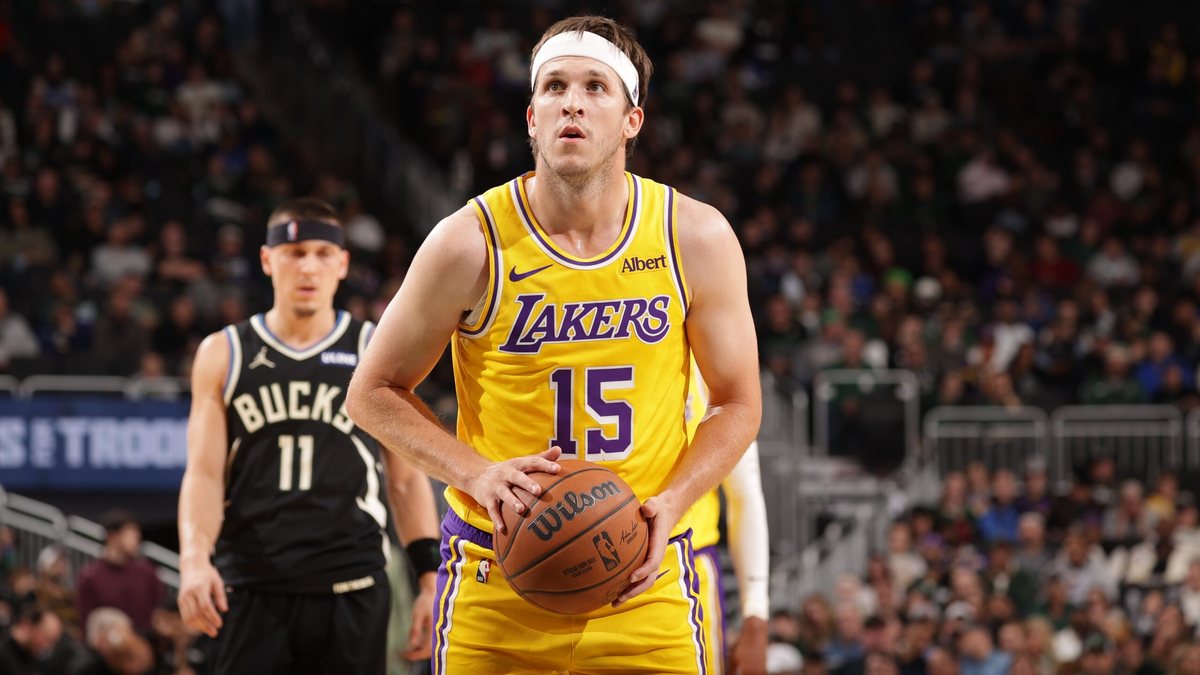
The offense may also get thinner this week. Austin Reaves left Wednesday’s game in the third quarter with a left heel injury, per NBA.com. His X-rays were negative, and he was set for more imaging in Los Angeles on Thursday, ESPN’s Dave McMenamin reported. Whatever the scan says, the Lakers have been 19.5 points per 100 possessions better with Reaves on the floor than off it, per Basketball Reference’s on-off numbers, the biggest gap on the team after Luka Doncic’s.
Reaves scored 43 in Detroit on Sunday with Doncic sitting, per ESPN. If he misses time, the Lakers lose the guard who carried them the last time Doncic sat, and the defense can’t keep handing 42 points back from three.
What I’d Change
The schedule gives Redick room to work. After Sunday’s game in Phoenix, the Lakers host Charlotte, Utah, Sacramento and Utah again, per Basketball Reference. Through Wednesday, Charlotte took 51.2% of its shots from three, tied with Portland for the highest rate in the league. That’s the test I’d circle.
My rule would be simple: the defense is judged on opponent three-point attempts first. Get the share under the league average of 43.1%, even if that means fewer swipes at the ball and fewer gambles in the passing lanes. Kessler has earned the right to handle more drives without a second defender sinking in. Let him. Keep the wings home, close out hard, and make teams beat the big man at the rim.
The steals will keep coming either way. The threes will keep coming too, unless somebody decides they matter. An 11-2 team with a 9-4 Pythagorean record has two wins on credit, and the three-point line is where that bill comes due.